
Speed Percentile Equation:
100,000/(Your Current Speed + 100) = Speed Percentile (Round up, no decimals)
Turn Order Equation:
Current Turn Order + Speed Percentile = New Turn Order
One vs. One Battle
Ninja A - 1200
Turn Order pre-battle: 77
Ninja B - 700
Turn Order pre-battle: 125
(Ninja A starts because they have the lowest Turn Order)
Ninja A Turn 1
Speed Percentile: 77
Turn Order: 144
(Now Ninja B is up because his Turn Order is lowest.)
Ninja B Turn 1
Speed Percentile: 125
Turn Order: 250
(Now Ninja A is up because his Turn Order is lowest.)
Ninja A Turn 2
Speed Percentile: 77
Turn Order: 231
(Ninja A is up again, because their Turn Order is still lowest.)
Ninja A Turn 3
Speed Percentile: 77
Turn Order: 308
Ninja B Turn 2
Speed Percentile: 125
Turn Order: 375
Ninja A Turn 4
Speed Percentile: 77
Turn Order: 385
Ninja B Turn 3
Speed Percentile: 125
Turn Order: 500
Ninja A Turn 5
Speed Percentile: 77
Turn Order: 462
Ninja A Turn 6
Speed Percentile: 77
Turn Order: 539
Ninja B Turn 4
Speed Percentile: 125
Turn Order: 625
Visual Representation
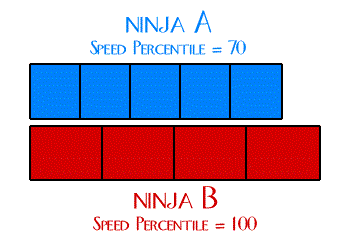
The turn order after turn one is what is important. It allows for irregular stacking of turns. If you imagine each person's turn to be a size of block, people with higher speeds having smaller blocks. If you stack these blocks into a tower next to each other, the top of each block would be when each person starts their turn.
Now as you can see, the black lines of the bar represent when the ninja takes a turn, starting at the bottom would be the first turn. Because Ninja A's blocks are smaller, they sometimes stack multiple times before Ninja B's single block. Sometimes resulting in one turn before his, and sometimes two, depending on his it falls. This is how Turn Order works.